


What Is Game Aggregation in iGaming? Complete Guide for Operators
What is game aggregation?
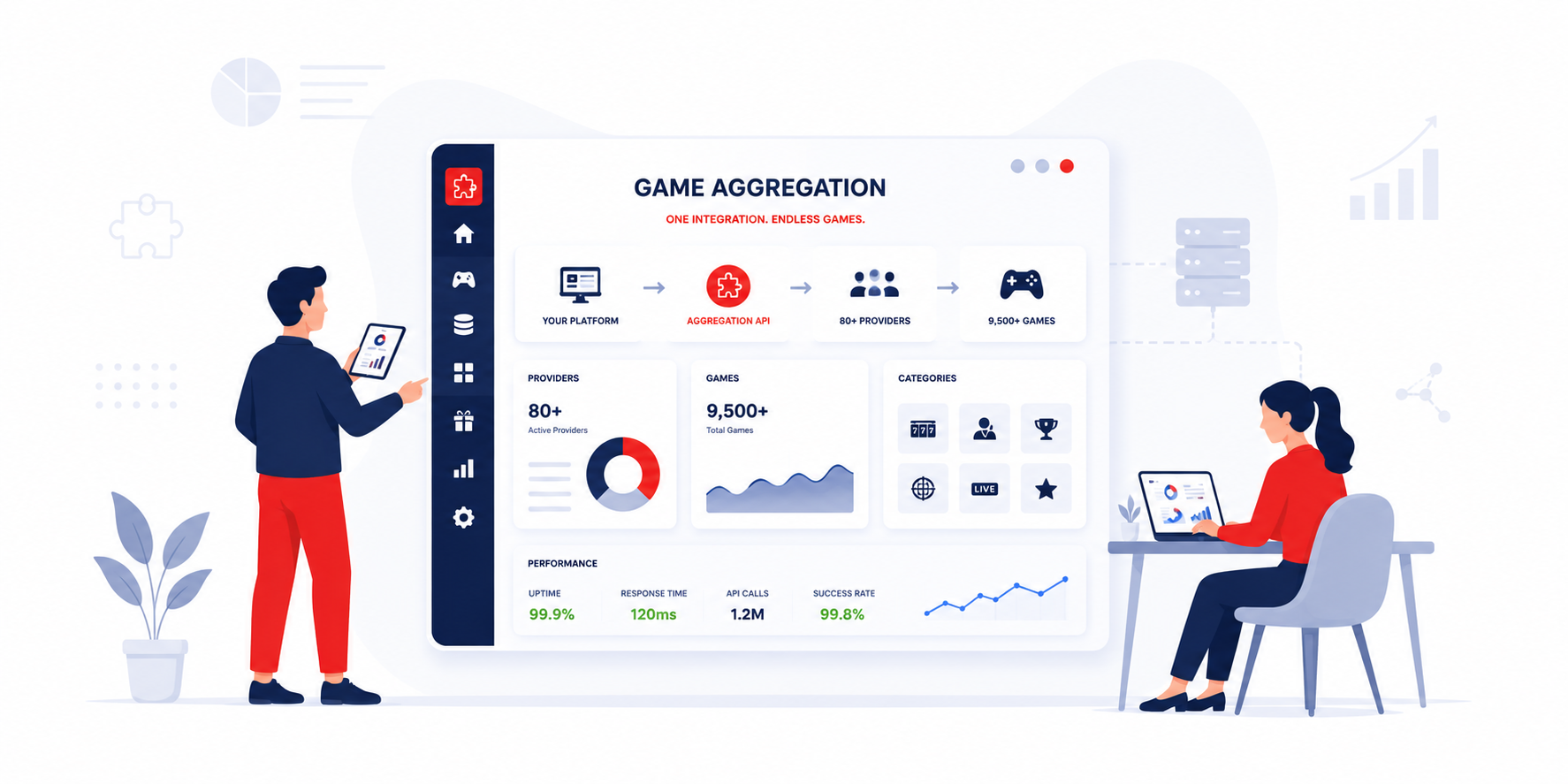
Game aggregation in iGaming refers to the process of integrating multiple game providers into a single platform through one unified connection.
Instead of signing separate deals and building individual integrations with each game studio, operators can access thousands of games through a single aggregation layer.
In simple terms, aggregation allows operators to expand their game portfolio faster and manage everything from one place.
For a broader overview of the industry, see online gambling ecosystem.
How game aggregation works
Game aggregation works as a bridge between operators and game providers.
Instead of connecting directly to each provider, the operator integrates with an aggregator. This aggregator already has existing connections with multiple studios and delivers their content through a unified API.
The process looks like this:
- the operator connects to the aggregation platform
- the aggregator provides access to multiple game providers
- games are delivered through one integration
- the operator manages everything via a single back office
This significantly reduces technical complexity and speeds up time to market.
👉 To understand how this fits into the overall system, see: What is iGaming?
Why game aggregation matters
Game aggregation is one of the key building blocks of modern iGaming platforms.
Without aggregation, operators would need to:
- negotiate contracts with each provider individually
- handle separate integrations
- manage multiple back-office connections
With aggregation, all of this is simplified.
The main benefits include:
- faster content onboarding
- lower technical overhead
- access to a wide game portfolio
- centralized management of games
Types of game aggregation models
Not all aggregation solutions work the same way. There are several approaches used in the industry.
Direct aggregation
In this setup, the platform provider acts as the aggregator and connects directly to game studios.
This gives operators more control but requires stronger technical infrastructure.
Third-party aggregation
Operators connect to an external aggregator that provides access to multiple providers.
This is the most common model and allows for quick scaling and easier market entry.
Hybrid aggregation
Some operators use a mix of both approaches. They integrate key providers directly while using aggregation for the rest of the portfolio.
What Is PAM in iGaming?
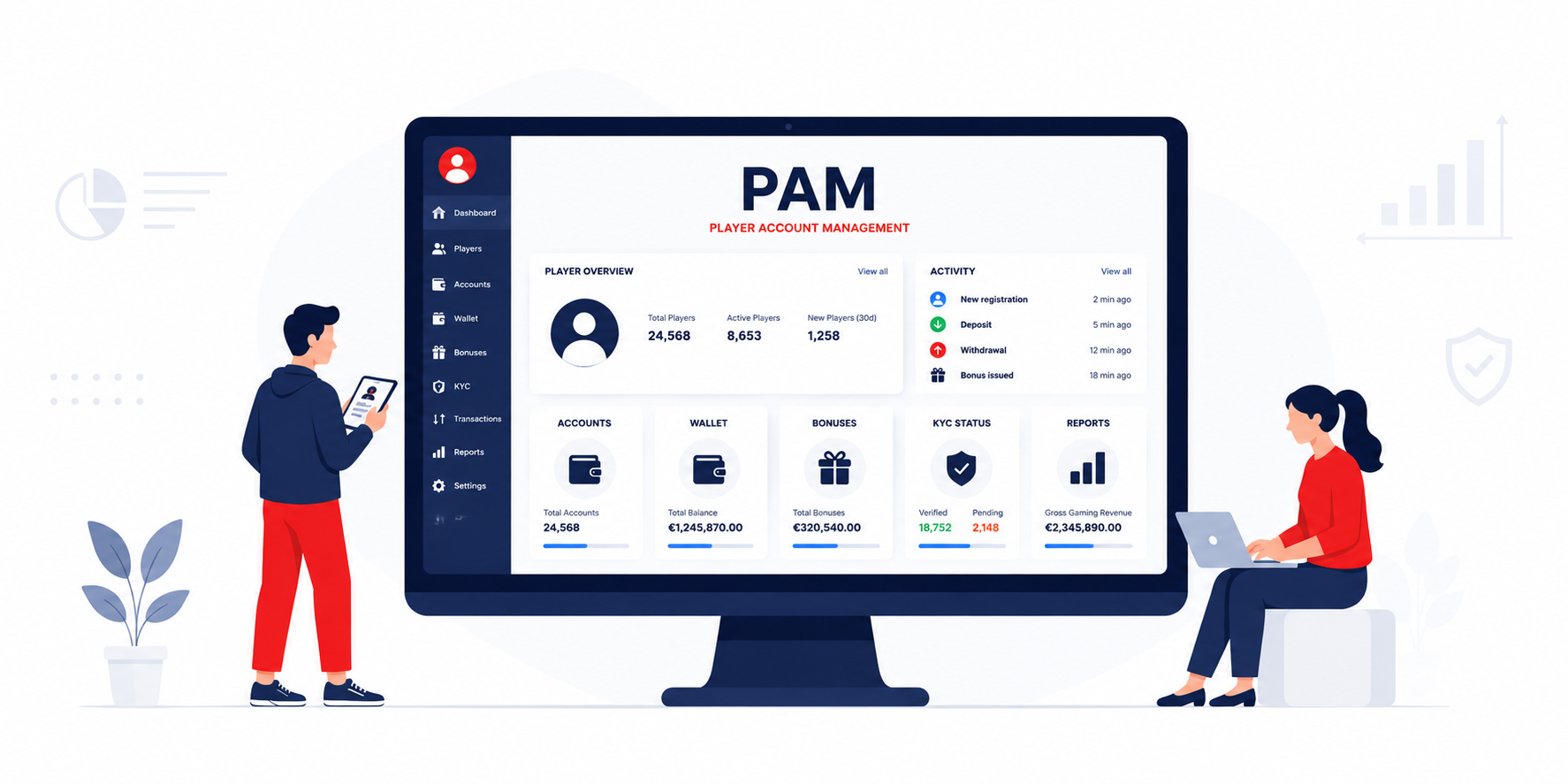
While game aggregation connects operators with content providers, PAM systems manage player accounts, wallets, bonuses, and regulatory requirements.
Key components of a game aggregation platform
A strong aggregation solution is not just about connecting games. It includes several important features.
Game content management
Operators need tools to manage game visibility, categories, and localization.
Unified API
A single API integration is essential for simplifying technical operations and reducing maintenance costs.
Back-office integration
Aggregation platforms must connect to the operator’s back office for reporting, analytics, and performance tracking.
Compliance and certification
Games must meet regulatory requirements in each market, including certification and RTP transparency.
Game aggregation vs direct integration
Operators often consider whether to use aggregation or connect directly to providers.
Aggregation advantages
- faster launch
- easier integration
- broader content access
Direct integration advantages
- more control
- potentially better commercial terms
- deeper customization
In practice, most operators combine both approaches depending on their strategy and scale.
How game aggregation supports casino growth
Game aggregation has a direct impact on business performance.
A wider game selection increases player engagement and retention. It also allows operators to target different player segments with diverse content.
Aggregation also supports:
- faster expansion into new markets
- easier onboarding of new providers
- simplified content updates
For growing operators, aggregation is not just a technical solution. It becomes a strategic tool.
How game aggregation fits into an iGaming platform
Game aggregation is just one part of the overall platform ecosystem.
It works together with:
- player account management systems
- payment solutions
- bonus and loyalty tools
- reporting and analytics
👉 For a deeper understanding of the full platform structure, see: What is iGaming Platform?
Future trends in game aggregation
The role of aggregation continues to evolve as the iGaming industry grows.
Key trends include:
- increasing number of game providers
- demand for exclusive content
- real-time performance data
- improved personalization of game lobbies
- tighter regulatory requirements
Aggregation platforms are becoming more than just content hubs. They are evolving into full ecosystem connectors.
Who we are?
At SYNOT Interactive, we don’t just deliver a product – we become your strategic partner. Our goal is to help you enter new markets with confidence by tailoring our solution to your business model and regulatory environment.
What truly sets us apart is our people. Our team includes industry experts with over 30 years of experience in the sports betting business. Their deep understanding of operational needs, player behavior, and market specifics allows us to deliver not only a solution – but a strategy that works.
By combining this decades-long expertise with modern technology, we provide you with a significant competitive edge.
We believe in building long-term partnerships that go beyond the basics of software. With SYNOT Interactive, you gain a trusted ally dedicated to the success of your iGaming solutions from launch to growth.
👉 Get in touch with our team.
👉 Check our product portfolio where we offer complete iGaming solution.
What Is Game Aggregation in iGaming? FAQ
It is a solution that allows operators to access games from multiple providers through a single integration.
It simplifies integration, reduces costs, and provides access to a larger game portfolio.
Aggregation uses one connection to access multiple providers, while direct integration connects to each provider individually.
For most operators, yes. It significantly reduces complexity and speeds up launch time.
Depending on the provider, aggregation platforms can offer thousands of games from dozens of studios.